Let’s be honest. You see those ads in your own feed every day. The flashy car. The perfect skincare. That course is promising to make you rich. And you think, “Does this actually work for anyone?”
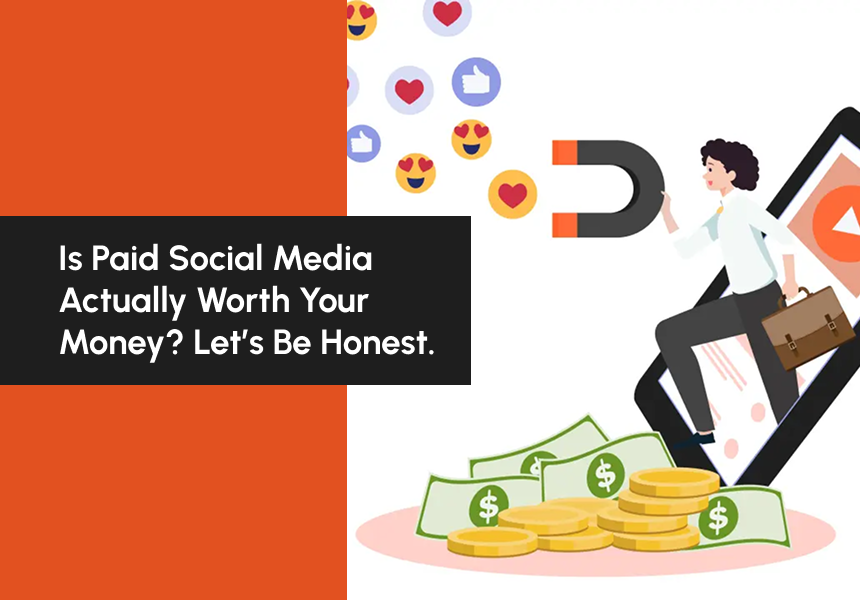
Then you look at your own business. You’re posting, maybe even consistently. However, it sounds like yelling into a packed room. It’s not being heard. The big question starts to itch in your brain: Is paid social media worth the investment?
It’s a scary question. It means opening your wallet. Giving your hard-earned money to a black-box algorithm is what it entails. “You have it. I’ve been there before, my finger lingering over the “Boost Post” button while my pulse pounded. What if I just burn this cash?”
We will discuss that fear. We’ll also be honest about what paid social media is and, more crucially, what it isn’t.
Paid Social Media, Explained Like a Human (No Marketing Talk)
Now let’s go right to the subject. What is paid social media?
In short, it entails paying a social media site (like Facebook, Instagram, TikTok, or LinkedIn) to display your work to a certain niche or a larger audience. It isn’t paranormal. Examine it in this manner:
On a peaceful side street, you own a wonderful little bakery. You have a “Free Samples” sign, which is what you usually display. A couple of passersby may enter. Organic reach is that.
Now, imagine you could pay to put your “Free Samples” stand on the busiest main street intersection in town. And you could even choose to only offer samples to people who just walked out of a gym (they’re probably hungry!) or people carrying shopping bags from other food stores.
That’s paid social media advertising. You’re paying for a better, more targeted location for your message. That’s it.
The Biggest Myth That Messes Everyone Up
Here’s the lie: “If I just make great content, people will find it.”
It sounds nice. It’s what we wish to think. But in 2024, it’s primarily a fantasy tale for corporations. The social platforms themselves are businesses. They make money by keeping you scrolling on their app, looking at their ads. They have zero incentive to show your free business post to all your followers unless it makes them look good.
Your amazing post about your new product? It’s up against a news story, a popular dog video, and the vacation pictures of your follower’s aunt. For nothing.
Paid social media campaigns cut through that noise. You’re saying to the platform, “Hey, I have something important to show this specific group. Here’s some money. Please make sure they see it.” It’s a transaction. A direct, clear one.
When Spending on Ads Is Honestly a Bad Idea
Let’s not sugarcoat it. Paid social marketing can be a fast way to burn cash if you do it wrong. It’s worth it ONLY if you avoid these traps:
- You’re boosting. Just to “Get Likes”: If your goal is just more hearts or thumbs-up, stop. Save your money. Likes don’t pay bills. A “like” is a tiny hit of dopamine for you, not a customer.
- Your Page is a Ghost Town: You boost a post, and someone clicks to your profile. It has 3 posts from 2022. They leave. Money wasted. Your profile is your storefront. Clean it up first.
- You’re Selling to Everyone: Saying your target is “women, 18-65, in the US” is a great way to waste money. You need to be specific. More on that in a second.
- Your Website Is a Dead End: You drive all this paid traffic to your site, and it’s slow, confusing, or the “Buy Now” button is broken. The problem isn’t the ad; it’s the destination.
If you’re guilty of any of these, pause. Fix the foundation first. Then come back to paid social advertising.
When Paid Social Finally Clicks and Starts Making Sense
Now, the good stuff. Here’s when writing that check feels incredible:
- You Have a Particular Message for Particular Individuals: Introducing a new range of trail runners’ running shoes? You can target folks who live close to hiking routes, purchase outdoor goods online, and follow trail running pages. Power is that. Efficiency is that.
- You Need Real Results, Not Just Vanity Measures: You want customers to come to your website, sign up, download apps, or buy things. The platforms can track this. You can literally see, down to the dollar, what you spent and what you made back. That’s called ROI (Return on Investment), and it’s the only number that matters.
- You Want to Grow a Warm Audience Fast: You can run a great ad to cold strangers who fit your ideal customer profile. They click, they learn, and they maybe don’t buy yet. But now, you can show them different ads (softer, more educational ones). You’re warming them up. This is how paid social media campaigns build a sales funnel.
I remember the first time a paid social ad worked for me. It was a small $20 test. I got 3 email sign-ups from perfect-fit people. One became a client who paid me ten times that ad spend. The feeling wasn’t just “success.” It was clarity. I finally understood the game.
Stop Chasing Virality; Focus on the Right People
Your goal with paid social media advertising is not to make the next viral sensation. That’s a lottery ticket.
Your goal is to be extremely relevant to a limited number of people who are most inclined to care.
If 1,000 individuals view your advertisement and 100 of them are actually interested, that’s better than if 100,000 see it and 99,000 ignore it. Relevance beats reach every single time for a business.
How to Start Small Without Burning Your Budget
Terrified of losing money? Good. That’s smart. Here’s how to start so small it doesn’t hurt:
- Choose ONE goal, not five. Just one. “This week, I want thirty visitors to view my website’s ‘Pricing’ page.” That is all.
- Really, give it a tiny budget. Start with $5 a day for 7 days. $35 is that. A nice dinner out. You can risk that.
- Target Like a Sniper, Not a Shotgun: Get specific. Use the detailed targeting options. Think about your one perfect customer’s interests, job titles, and what they watch.
- Track ONE Thing: Where does your ad send people? To a specific landing page? Use a simple tool (many are free) to see if visits came from your ad. Don’t get lost in data at first.
This isn’t a “campaign.” It’s an experiment. Your $35 is buying you data and an education. Did your perfect people click? What did they do? That information is pure gold, whether you make a sale or not.
Quick Results vs. Real Growth: What You’re Actually Playing For
Paid social marketing can do two things:
- The Quick Win: A sale, a sign-up, a download. Direct and fast.
- The Long Game: Creating a community, trust, and brand awareness. provoking the thought, “Oh yeah, I’ve heard of them. They’re legit.”
Most people only chase the quick win. But the real magic happens when you mix both. Run some ads for sales. Run others just to tell your brand’s story to new people. Over time, when they see your “buy now” ad, they’re already primed to trust you. This is how big brands are built now.
If managing this feels like too much, that’s exactly where professional digital marketing services come in. They handle this mix for you.
Conclusion
Let’s circle back. Is paid social media worth the investment? That varies. It is not a miracle but a tool.
If you use it with a learning attitude, a limited testing budget, a targeted audience, and a defined objective? So, yes. It can be among the most effective, quantifiable, and scalable investments you make in the expansion of your company.
It turns guesswork into strategy. It turns “hoping people see us” into “knowing our message is being delivered.”
You don’t have to bet the farm. Start with the cost of a pizza. Learn. Adjust. See what the data tells you. That’s how you find your answer. Not by asking me, but by running your own tiny, brave experiment.
Frequently Asked Questions (FAQs)
What is paid social media in simple terms?
It’s paying a social media platform to show your post to more of the right people, instead of just your followers.
Is paid social media worth it for a small business?
Yes, if you’re clear on who your customer is and what you want them to do, like visit your website or sign up.
What’s the difference between paid and organic social media?
Organic is free posting for people who already follow you. Paid puts your post in front of new, targeted strangers.
How much should I spend on paid social media ads?
Start with a tiny test budget like $5 a day to learn what works before spending more.
Which platform is best for paid social media advertising?
Go where your ideal customers already spend their time (e.g., Instagram for visuals, LinkedIn for business services).