







If you are working in the SEO field, you have heard the word “Google E-E-A-T.” Google’s human search quality uses it to ensure webpage content is helpful and reliable for the users. Also, these signals make search engine ranking better by giving credibility and authority to your content. Moreover, in SEO, it is the most important factor to understand. After reading this blog, you will know what E-E-A-T is, along with how it works and why Google gives value to it in the simplest way.
What Does Google E-E-A-T Mean?
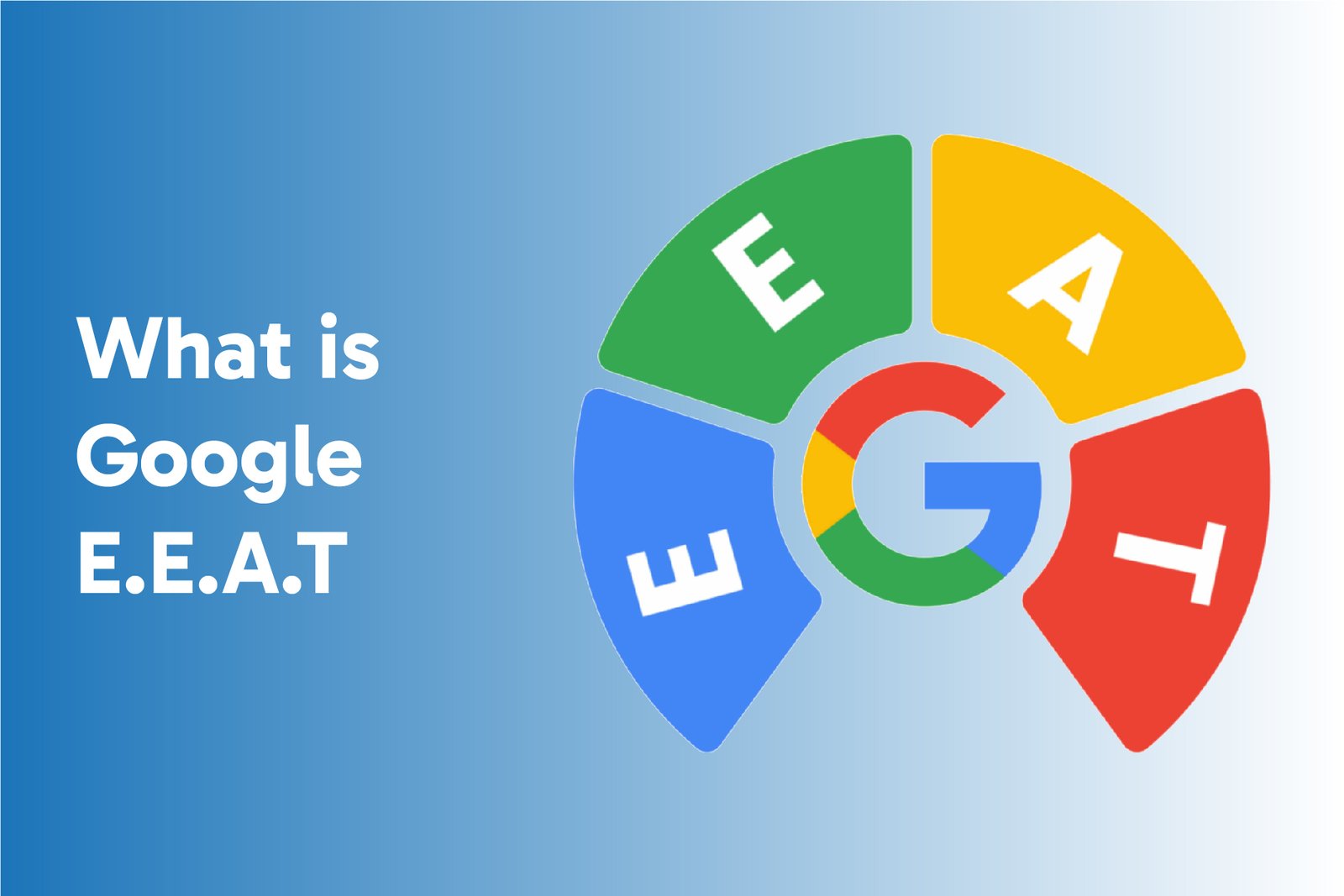
E-E-A-T is short for
- Experience
- Expertise
- Authoritativeness
- Trustworthiness
This is what Google looks like when it reads quality content. If you want to rank your site, you have to make sure your content carries all these factors. It significantly improves the visibility and search ranking and tells users that the content is created from credible sources.
What is E-E-A-T in SEO?
When people ask, “What is E-E-A-T in SEO?”, the simple answer is this: it is Google’s way of deciding whether your content is valuable and reliable.
Search engines do not want to send users to random or weak sites. If someone is searching for health advice, financial tips, or even just how to cook pasta, they need to find content that is accurate and safe. E-E-A-T is the system that helps Google filter out the noise.
So if you are trying to rank your site, you need to focus on:
- Do I show real experience?
- Do I write with expertise?
- Does my site look like an authority?
- Can people trust my words?
Why Did Google Add “Experience”?
Originally, E-A-T stood for Expertise, Authoritativeness, and Trustworthiness. However, people started noticing real-life experience more, so now Google adds experience to it. For example, if people want to order any skincare, they are more interested in hearing a review from a customer who actually used it. So, Google cares about people’s authentic voices.
Google E-E-A-T Guidelines Explained
The Google E-E-A-T guidelines are a framework for content quality, not a secret; they guide website owners, writers, and businesses, and also help users determine whether content is helpful and reliable or not.
Here is a simple breakdown:
- Experience—this is a personal review, a unique perspective, share personal stories, real examples, or proof.
- Expertise—Write like someone who knows the subject. That does not mean you need a PhD, but your knowledge should be precise.
- Authoritativeness—Build your reputation. Get mentioned by other trusted sites, and make your website look professional.
- Trustworthiness—Be honest and transparent. Add sources and contact details, and secure your website.
By following these guidelines, you help Google (and your readers) see you as a valuable source.
Why Google E-E-A-T Matters for SEO
Because SEO is not just about keywords anymore, Google has become smarter. It is a framework that provides signals of trustworthiness and authority to Google algorithms. Google can now “read” content in a deeper way. If your site looks spammy or untrustworthy, even perfect keywords will not save you.
E-E-A-T SEO connects with human values. It is not about tricking search engines. It is about building a site that people actually want to visit and believe in. Google uses multiple systems in the ranking process, such as quality references, refining algorithms, AI evaluation, and prioritizing quality.
Examples of Google E-E-A-T in Action
Let us make this real with some examples:
- Health Website: A blog about medicine should ideally be written by a doctor or at least reviewed by one. That shows expertise and trust.
- Food Blog: A recipe post feels stronger when the writer adds their personal cooking tips. That shows experience.
- Local Business: A company offering SEO services in Toronto can prove authority by showing client reviews, case studies, and local results.
- Finance Blog: People want advice from certified experts, not random anonymous writers. That builds trust.
How to Improve Your Google E-E-A-T
Here are some easy steps you can take today:
- Add Author Bios—Tell people who you are and how they benefit by listening to you.
- Show Real Experience—Use photos, stories, or proof of using products or services.
- Get Reviews and Mentions—The more others trust you, the more authority you build.
- Use Clear Sources—Link to trusted websites when making claims.
- Save your site – Secure it with HTTPS, update content over time, and make it user-friendly.
What Makes Google E-E-A-T Different from Old SEO Tricks?
Old SEO was about stuffing keywords everywhere. You could rank just by repeating “best pizza in Toronto” twenty times. However, now, Google looks at the whole picture. Google E-E-A-T is about absolute value, not shortcuts. That means your content should be written for humans first, not for machines. Let us do a comparison between old SEO and E-E-A-T.
| Feature | E-E-A-T new SEO | Old SEO trick |
| Primary goal | Build trust and credibility for the long term | Use instant ranking tips |
| Content strategy | Experience driven and user first | Keyword stuffing |
| Link building | Quality backlinks from trusted sites | Use irrelevant links |
| Keywords | Natural and according to intent | Repeated without context |
| Transparency | Clear authorship, details, and sources | Anonymous |
| Website structure | Secure and user friendly | Slow loading |
| User experience | Simple navigation and updated content | Ignored user experience |
| AI content | Human edited content | Overuse of robotic flow |
The Human Side of Google E-E-A-T
E-E-A-T is not just about algorithms and rankings. It is about trust between humans. When readers see real experience, evident expertise, and honest communication, they feel connected. Google simply rewards that human trust.
Quick Myths About Google E-E-A-T
Even though it is widely discussed, there are still misconceptions:
Myth 1: Google E-E-A-T is a direct ranking factor. → It is not. It is a guideline for content quality that influences ranking.
Myth 2: Only big brands can show authority. → Small sites can build authority through reviews, local mentions, and consistent value.
Myth 3: Adding keywords is enough for trust. → Trust comes from transparency, not keyword stuffing.
Conclusion
Google’s E-E-A-T is not just a guideline because it encourages writers to build content that’s helpful, trustworthy, and human. Old SEO tricks may get short-term results, but E-E-A-T builds a brand that survives for the long term. If you focus on experience, expertise, authoritativeness, and trustworthiness, your site will not just rank—it will earn respect.
Frequently Asked Questions (FAQ’s)
How to create E-E-A-T content?
Create high-quality content with complete author information, trusted backlinks schema, and build brand authenticity, creating user-generated content.
Is AI content good for SEO?
Yes, it is valuable for seo strategy and can boost your website ranking and visibility.
What is semantic SEO?
It is a strategy for optimizing your content according to users’ intent rather than just matching keywords.
How to measure content quality?
Audience feedback, performance, AB testing, and competitive analysis are great ways to measure content quality.
Does Google ban AI content?
If AI is used in an appropriate way, not against the guidelines, it will not be banned.