
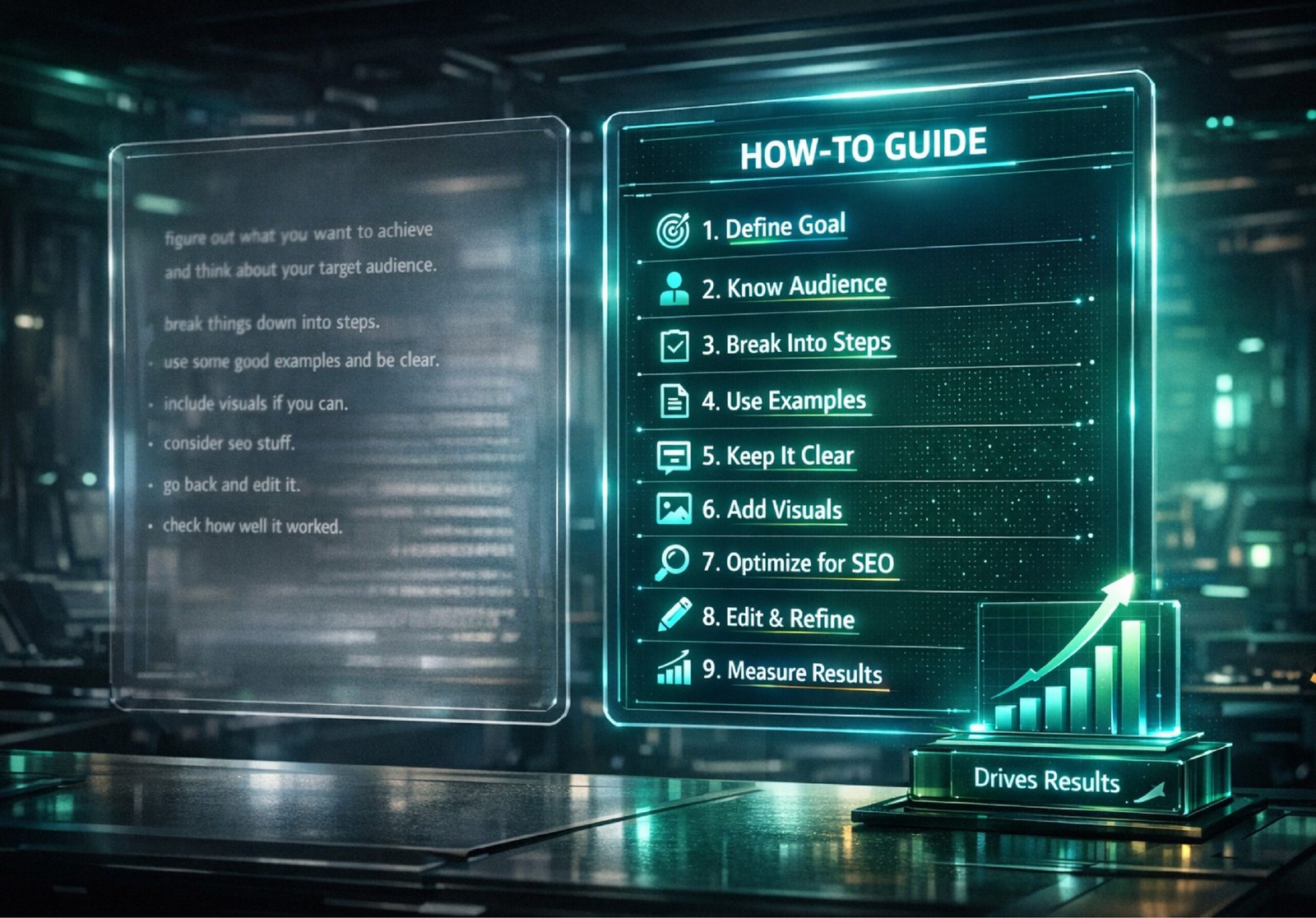









Everyone says “just write a how-to guide”… but no one tells you how to actually make one that people read, trust, and share. And that’s the difference.
Because of a bad guide? People bounce in seconds. But a good how to guide? It ranks, gets saved, and even turns readers into customers.
So in this blog I will try to explain it as simply as possible. It has tips that will work in 2026.
What Is a How-To Guide (And Why It Still Works in 2026)
A how to make a guide is simple: It is a piece of content that shows someone how to do something step by step in a blog
But here’s the part most people miss…
It’s not just about instructions.
It’s about making things easy to follow.
Think about it like this:
- Someone searches “how to write a resume”
- They don’t want theory
- They want clear steps they can follow right now
That’s why how to guidelines content still dominates Google.
People want answers. Fast.
And if your guide delivers that? You win.
Why Businesses Should Care About Writing Guides
I want to make this easy to understand. A good guide can do an important things for you.
- A good guide can bring people to your website from Google.
- A good guide can also help build trust with the people who read your work.
- There are a few things a good guide can do.
- A good guide can reduce the number of questions people ask you for help.
- A good guide can turn the people who read your work into leads, for your business.
In fact, many companies use guides as part of their Digital Marketing Services strategy to attract and educate customers at the same time.
It’s not just content.
It’s a long-term asset.
9 Smart Tips to Create a High-Quality How-To Guide
Now lets get to the stuff, the tips that really make your guide special. Here are some tips to help your guide stand out:
1. Start With a Clear Goal (Not Just a Topic)
Most people start like this:
“I want to write a guide on SEO.”
That is too broad.
Instead think like this:
What problem are you trying to solve with SEO?
Examples:
- How to write a resume with no experience
- How to create a landing page that converts
- How to start a blog in 2026
The more specific your topic, the better your guide performs.
2. Understand Who You’re Writing For
Before you even start writing, ask:
- Is this for beginners?
- Is this for professionals?
- What do they already know?
Because here’s the mistake:
Mixing beginner + advanced content = confusion
If you’re writing for beginners, keep it simple.
If it’s advanced, go deeper.
This is what separates average guides from great ones.
3. Do Real Research (Even If You Know the Topic)
This is where most writers get lazy. They do what is easy and rely on what they know.. Smart writers do things differently. Smart writers
- Check what is already ranking
- Look at guide examples
- See what other writers missed
The goal of the writers is very simple: they want to make their guide better, than the guides that are already out there.
That is how the smart writers get noticed by people who are looking for guides.
4. Create a Step-by-Step Structure
A messy guide kills engagement. Instead, use a clear step-by-step guide template:
- Introduction
- What you’ll need
- Step-by-step instructions
- Tips
- FAQs
This structure works because it’s predictable. People don’t want to “figure things out” they want to follow along.
5. Write Clear Step-by-Step Instructions
This is the core of your guide.
And this is where most people mess up.
Bad example:
“Your content strategy should include audience research.”
Better example:
“Identify your target audience by analyzing their age, interests, and problems.”
See the difference? Always write like you’re explaining to someone new.
Use step-by-step instructions examples that are:
- Clear
- Direct
- Action-based
6. Use Visuals (Seriously, Don’t Skip This)
A big block of text is really annoying. People like to look at pictures and things to understand stuff faster. You should add some things like
- Screenshots
- Images
- Charts
- Short videos
Really simple pictures can make things clearer. This is because it is often better to show something of trying to explain it.
7. Make Your Guide Easy to Scan
Here is how people really read blogs: They do not read them. They just look at the parts.
So your guide should include:
- Short paragraphs
- Bullet points
- Subheadings
- Bold text
This improves readability instantly. A good guide is not just written well it’s structured well.
8. Add Real Examples
If your guide has no examples, it feels incomplete. People want to see what success looks like.
For example: If you’re teaching content writing, show:
- A bad example
- A good example
This makes your guide 10x more useful. And it builds trust.
9. Test Your Guide Before Publishing
This is something most people skip. But it’s powerful.
Follow your own guide step by step
Ask yourself:
- Does this make sense?
- Did I skip anything?
- Would a beginner understand this?
Even better: Ask someone else to test it.
You’ll be surprised how many gaps you find.
Real How-To Guide Examples That Work
Let’s quickly look at what makes strong guides stand out. Good how to guide examples usually:
- Start with a clear goal
- Break things into simple steps
- Include visuals
- Solve one specific problem
The key? Practical value over theory
Make Sure To Not Make These Mistakes
Before you publish your guide, avoid these:
- Being too vague
- Skipping steps
- Using complex language
- Writing for everyone (instead of one audience)
- Not updating outdated content
Remember: A guide is only useful if people can actually follow it.
To Summarize
A great how-to guide is not about writing more it’s about writing better. Clear steps, simple language, and real value. That’s it. Even when you face an internal server error, the goal remains the same: communicate solutions clearly so users can quickly understand what went wrong and how to fix it.
And if you’re creating guides as part of your business growth, this is where smart tech and strategy come in. For instance, if you are creating content platforms, or if you are looking for scalable solutions, collaborating with an experienced team such as Cognitive IT Solutions can help you monetise content.
Frequently Asked Questions (FAQs)
How to write a guide example?
Choose a topic, divide it into steps, and illustrate each step. Make it useful so it’s easy to follow.
How to write guide writing?
Address a single issue, keep it simple, and break it into steps or sections. Use headings, bullets and short sentences to improve readability.
How to write a step-by-step guide?
Write steps in chronological order, begin each step with a verb, and describe the process. Include examples or illustrations if needed.
How to write a how to guide template?
Start with a basic format: introduction, list of tools, step-by-step guide, tips and tricks, FAQs and conclusion. This ensures your guide is well structured.